
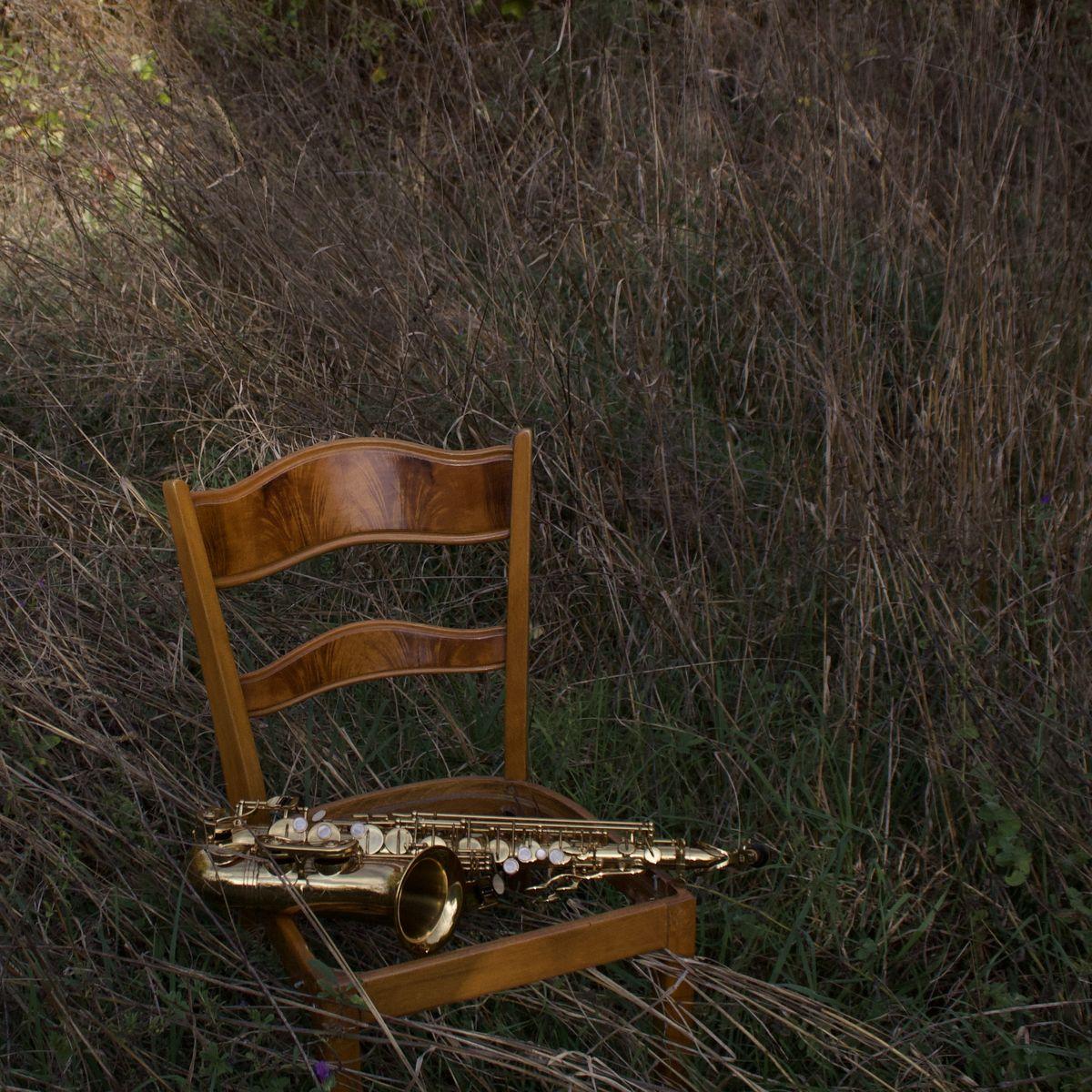
I’ve had every kind of summer as a musician. As a kid, summer meant music camp. Other years, I’d finally teach myself some pop song I’d been dying to play all year but my teacher would never have let me near. Later came the summers packed with back-to-back gigs. And the ones where I didn’t touch my instrument for two whole months and felt guilty the entire time.
But what does science actually say about the best way to handle the summer break? Should we stay disciplined, keep busy, or just rest? The answer surprised me, and it completely changed my approach to the months ahead.
The September Dread Is Real, but Mostly Overblown
Most of us carry the same fear into the break. That two months off will quietly erase the progress we fought for all year.
We picture coming back in September stiff, fumbling passages that used to feel easy, sliding backwards. It’s a reasonable fear. It’s also, according to the research, mostly exaggerated.
What “Use It or Lose It” Actually Means for Musicians
Motor skills are the physical, trained-into-your-hands kind that playing an instrument depends on. And they’re surprisingly durable.
In one striking study, researchers found that people retained a complex learned motor skill, right down to their individual style of performing it, even after eight years without practice (Park, Dijkstra & Sternad, 2013, Frontiers in Computational Neuroscience). And research on long-retained skills points to the same thing: even when something feels forgotten, your brain relearns it far faster than it learned it the first time.
So “use it or lose it” is real, but the loss is rarely total, and it’s rarely permanent. What you built doesn’t vanish over a summer. It dips, and then it comes back quickly the moment you pick the instrument up again.
The catch is the word quickly. It isn’t instant. There’s a relearning curve. The good news is that you can shrink that curve to almost nothing with a small amount of effort.
A Little Practice, Spread Out, Beats a Lot Crammed In
Here’s where the science gets genuinely useful. Decades of research on the spacing effect show that practice spread out over time produces far better long-term retention than the same amount crammed together. The landmark meta-analysis by Cepeda, Pashler, Vul, Wixted & Rohrer (2006, Psychological Bulletin) reviewed 317 experiments and found the advantage to be large and consistent, and it holds for musicians too: distributing practice across sessions gives memory more chances to consolidate, producing more durable motor memories than marathon sessions (Center for Music Learning, University of Texas at Austin).
The takeaway for summer is almost freeing. Ten minutes a few times a week protects more of your level than you’d think, and far more efficiently than a guilt-fuelled three-hour session the night before lessons resume.
How to Build Your Summer Pre-Season Plan
Borrow the mindset of athletes. They don’t go from full season straight to zero and back. They shift into a pre-season: lower intensity, a different focus, more base-building and play.
Summer is the musician’s pre-season. Here’s how to build one that actually fits a summer, in four small moves.
1. Set a maintenance minimum. Pick something almost laughably small. Ten minutes, three or four days a week. The number should feel easy enough that you’ll never have a good excuse to skip it.
This is the spacing effect from earlier doing the heavy lifting. Because spaced sessions consolidate skill more efficiently than the same time crammed together, ten honest minutes scattered through the week protects more of your level than one guilt-fuelled marathon in late August. The goal isn’t progress. It’s keeping the thread unbroken so September is a continuation, not a restart.
A practical trick: anchor those ten minutes to something you already do, like getting your instrument out right after morning coffee. This isn’t just folk wisdom. Habits form by repeating a behaviour in response to a consistent cue, so tying practice to an existing routine makes it far more likely to stick (Lally et al., 2010, European Journal of Social Psychology). And deciding in advance exactly when and where you’ll play, an “if-then” plan, has a medium-to-large effect on whether people actually follow through (Gollwitzer & Sheeran, 2006, meta-analysis).
2. Lower the stakes on purpose. No deadlines. No repertoire you have to finish. No one grading you.
During the year, almost everything you play is pointed at an outcome: a lesson, an exam, a concert. Summer is your chance to remove the outcome entirely. Give yourself explicit permission to play badly, to noodle, to stop a piece halfway because you got bored. That permission isn’t laziness. Studies of music learning consistently tie autonomy and enjoyment to stronger intrinsic motivation, which is exactly what keeps you picking the instrument up (Woody, 2021, Psychology of Music).
3. Build your base. Tone. Long notes. Slow scales. Breathing or posture. The unglamorous fundamentals you skip all year because you’re always busy prepping for the next performance.
Base-building is low-pressure by nature, which makes it a natural fit for summer. You don’t need fresh repertoire or full focus to spend five minutes on a warm, even tone, and these are the foundations that make everything else feel easier when the busy season returns.
4. Keep a tiny “September list.” When something nags at you during the year, a passage you never cleaned up, a technique you keep avoiding, jot it down. Don’t act on it now. Just collect it.
Come late summer, that list lets you set a clear plan for when and how you’ll tackle each item, the same kind of specific if-then planning shown to boost follow-through (Gollwitzer & Sheeran, 2006). You return with direction instead of staring at a blank music stand wondering where to start.
Use Summer to Fall Back in Love with Music
This is the part the school year never makes room for, and it might be the most important. Follow your curiosity instead of a syllabus: learn a song just because you love it, explore a genre you’ve never touched, play along to whatever’s on this summer, or jam without sheet music in front of you.
And this isn’t a detour from “real” practice. Research on music learning consistently links enjoyment, autonomy, and flow to stronger motivation and more effective practice (Woody, 2021, Psychology of Music; flow & autonomy study, 2025, Acta Psychologica). The summer you spend chasing music you love isn’t time off from getting better. It’s often when you get better.
Keeping It Going While You Travel
Summer travel often disrupts practice routines, especially for wind players. Saxophones and clarinets are bulky to pack, and even if you bring them, finding a place to play without disturbing others in a hotel or campsite is tough. The sheer volume often keeps the case shut, and the habit fades.
But this is a problem worth solving. Finding a way to play quietly for just ten minutes a day is what keeps your momentum going through the holidays. For many, that means packing a compact, digital wind instrument you can play through headphones, so being away is no longer a reason to stop.
So, What Does Your Summer Look Like?
You don’t have to pick the disciplined summer or the restful one. A pre-season can hold both: a light, low-pressure thread of playing woven through a summer that’s mostly about rest, travel, and rediscovering why you love this. Do that, and September won’t feel like starting over. You’ll come back refreshed, and a little more curious than when you left.
Because looking back, summer always passes far faster than I expect. And what I wish most is that I hadn’t spent so much of it feeling anxious about losing my level just because I went away on holiday.
So here’s my nudge: before the break runs away from you, pick your one small maintenance habit for the season. Then tell me, what does your ideal summer with music look like this year?
I’d love to hear it.
Clara Munté, Wind Product Manager
Sources
- Park, S.-W., Dijkstra, T. M. H., & Sternad, D. (2013). Learning to never forget: time scales and specificity of long-term memory of a motor skill. Frontiers in Computational Neuroscience, 7:111. Link
- Cepeda, N. J., Pashler, H., Vul, E., Wixted, J. T., & Rohrer, D. (2006). Distributed practice in verbal recall tasks: A review and quantitative synthesis. Psychological Bulletin, 132(3), 354-380. Link
- Lally, P., van Jaarsveld, C. H. M., Potts, H. W. W., & Wardle, J. (2010). How are habits formed: Modelling habit formation in the real world. European Journal of Social Psychology, 40(6), 998-1009. Link
- Gollwitzer, P. M., & Sheeran, P. (2006). Implementation intentions and goal achievement: A meta-analysis of effects and processes. Advances in Experimental Social Psychology, 38, 69-119. Link
- Center for Music Learning, University of Texas at Austin. Skill Learning and Procedural Memory. Link
- Woody, R. H. (2021). Music education students’ intrinsic and extrinsic motivation. Psychology of Music. Link
- Autonomy-supportive music teaching, collective learning, flow, and music students’ well-being (2025). Acta Psychologica. Link
Compartir:
When Music Stops Being a Product
How Our Clients Reimagined Portable Practice